We back the fights on the ground and connect them into a national force.
People are fighting Big Tech in more places than the movement has organizations to hold them. We meet them where they are. We’re active in over 14 states and over 25 cities.
MediaJustice gives local campaigns direct support: strategy, research on the project and the money behind it, training, and a network of organizers who have already walked in their shoes.
We test and win model victories to pave the way for future organizing, including:
The first statewide moratorium on data centers, pushed by a statewide coalition that coordinated dozens of grassroots groups through a combination of canvassing, direct actions, mass mobilizations and base building
In Tucson, after over a year of pressure from the No Desert Data Center Coalition, city council and the mayor passed a first-of-its-kind ordinance regulating large scale data centers with explicit guidance ensuring community concerns will be addressed at the local level. As MediaJustice organizer Vivek Bharathan said after the win, this allows movements to accrue evidence for the public health and environmental impacts of data centers while organizers continue to push for a ban.
Then we connect those fights into regional coalitions to national campaigns like BroBots vs the People.
To develop tech justice leadership in communities on the front lines of data center expansion, MediaJustice hosts a three-day data center organizing training, rooted in place, informed by legacies of civil rights and community activism. As always, our trainings are primarily for people of color, immigrants, and low-income folks. To date, we’ve hosted two cohorts of this training, graduating 182 community organizers to run their own campaigns oriented toward limiting the power of Big Tech in their communities.
This has a chain reaction by extending the lifespan and sustainability of site fights, building field capacity to train up newly activated people, and inoculating communities from industry astroturfing and right-wing attempts to claim a meaningfully anti-tech posture. Examples include: Seeding a statewide coalition to fight data centers in Texas where none existed just months prior, seeding data center organizers who choose to run for elected office, and building connective tissue between environmental justice and data center fights.
We are supporting site fights, assemblies, and actions across 25 states, including 3 statewide campaigns
We hosted a 3-day data center organizing retreat around two major hubs to develop community leaders beyond mass training
We trained almost 200 community members in 2025 through regional trainings across states and tribal communities in the US South and Southwest
Our regional trainings have sparked 8 state-based strategy collaborations so far
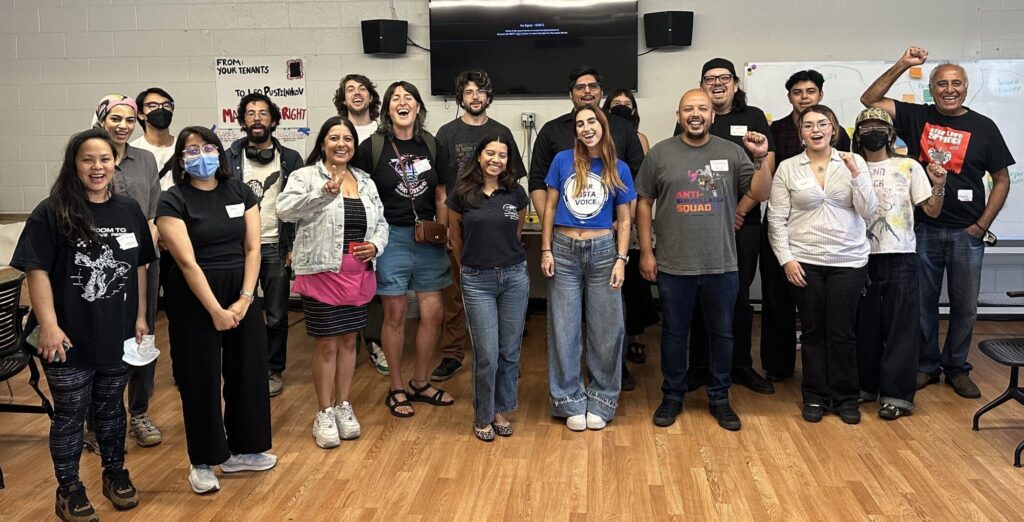
MediaJustice and Stop LAPD Spying Coalition hosted a late August convening in Los Angeles to bring together over 25 organizers from the region fighting technofascism.
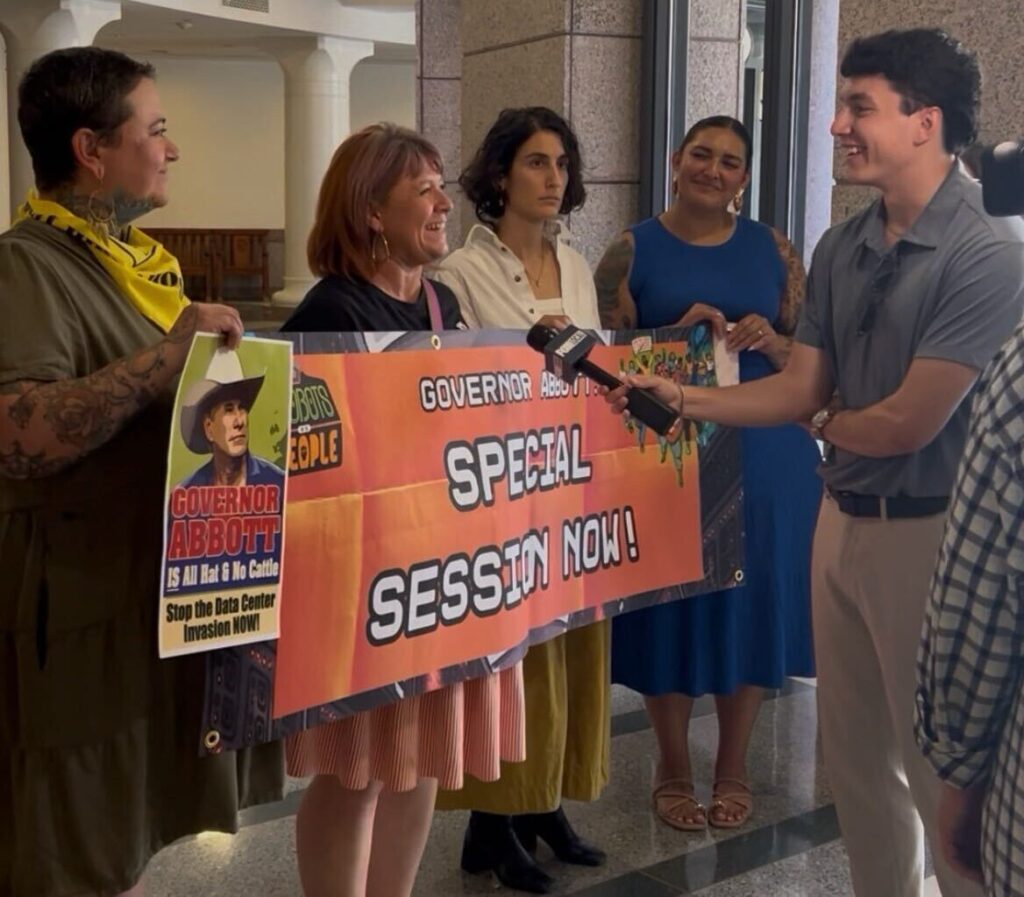
Texans from the No Desert Data Center Coalition drop a banner demanding that Governor Abbott call a special session to address data center concerns with art and graphics from the BroBots v. the People campaign.
“We won!!!! Evidence that there are still wins to be had!! … Pretty cool stuff!”
An organizer MediaJustice supported to win a data center fight
Recent Resources
BroBots vs the People: People’s Assembly Toolkit. Everything you need to host a people’s movement assembly in your town, from the agenda and facilitation guide to art and outreach templates.
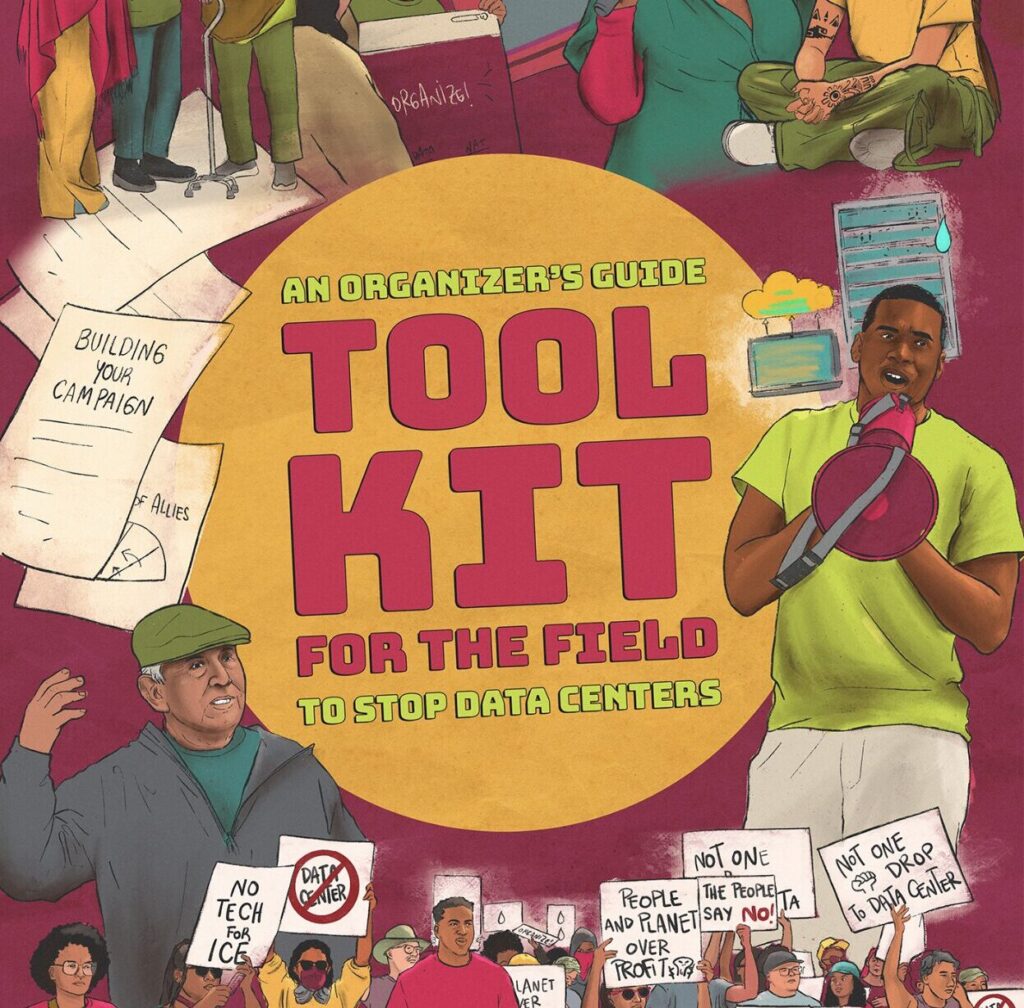
Our toolbox helps on-the-ground organizers get started with resisting data centers with everything from best practices, outreach templates, and tools for basebuilding and research.
Use the Map and List buttons above the map to toggle between a map and list view.
Use the filters below the map to find information specific to a category.
Icons in a state indicate that there are videos associated with that state.
There's currently no data for this state yet. If you have electronic monitoring stories and data for this state, please let us know by completing the map intake form at the top of the page