
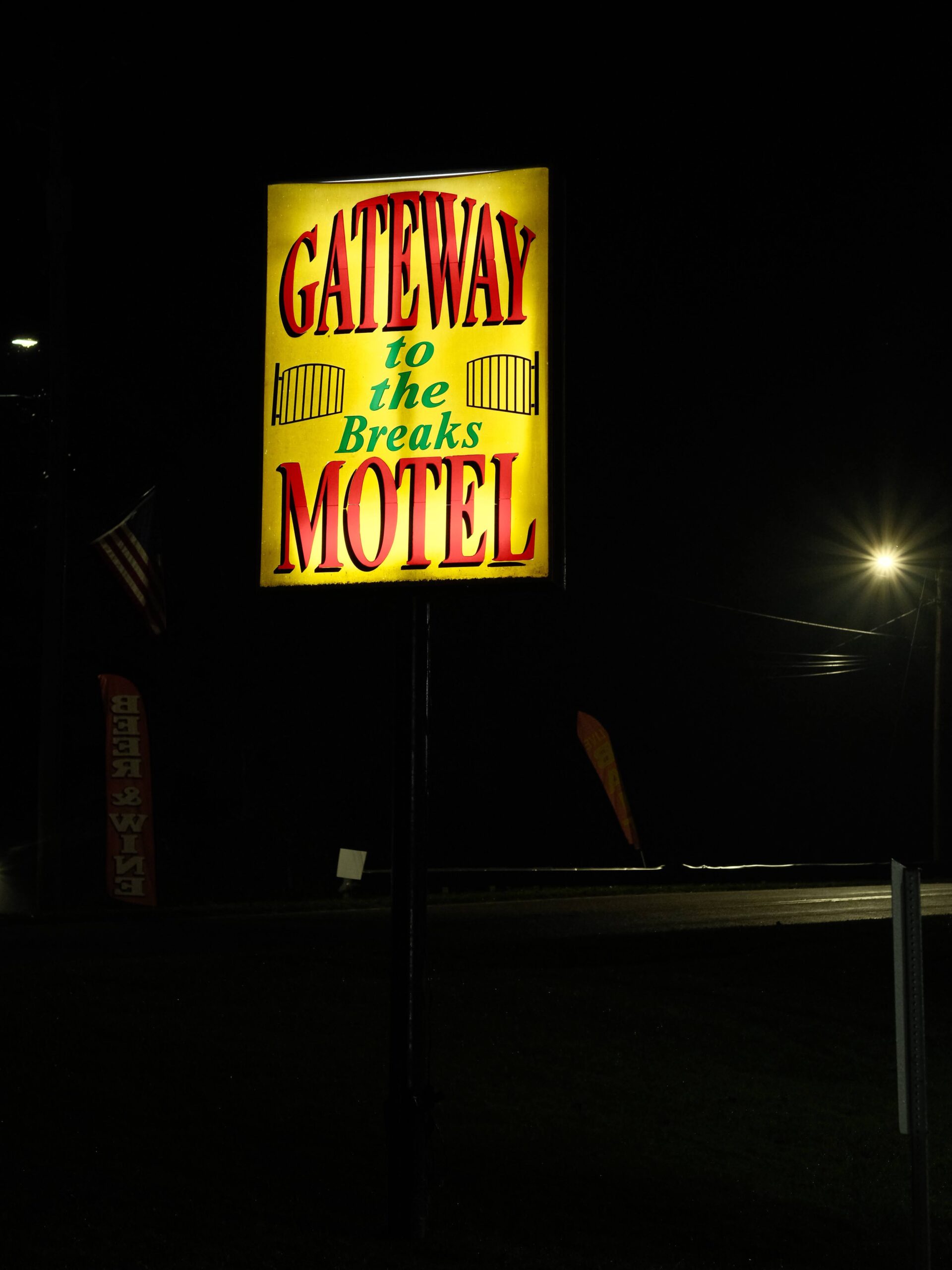
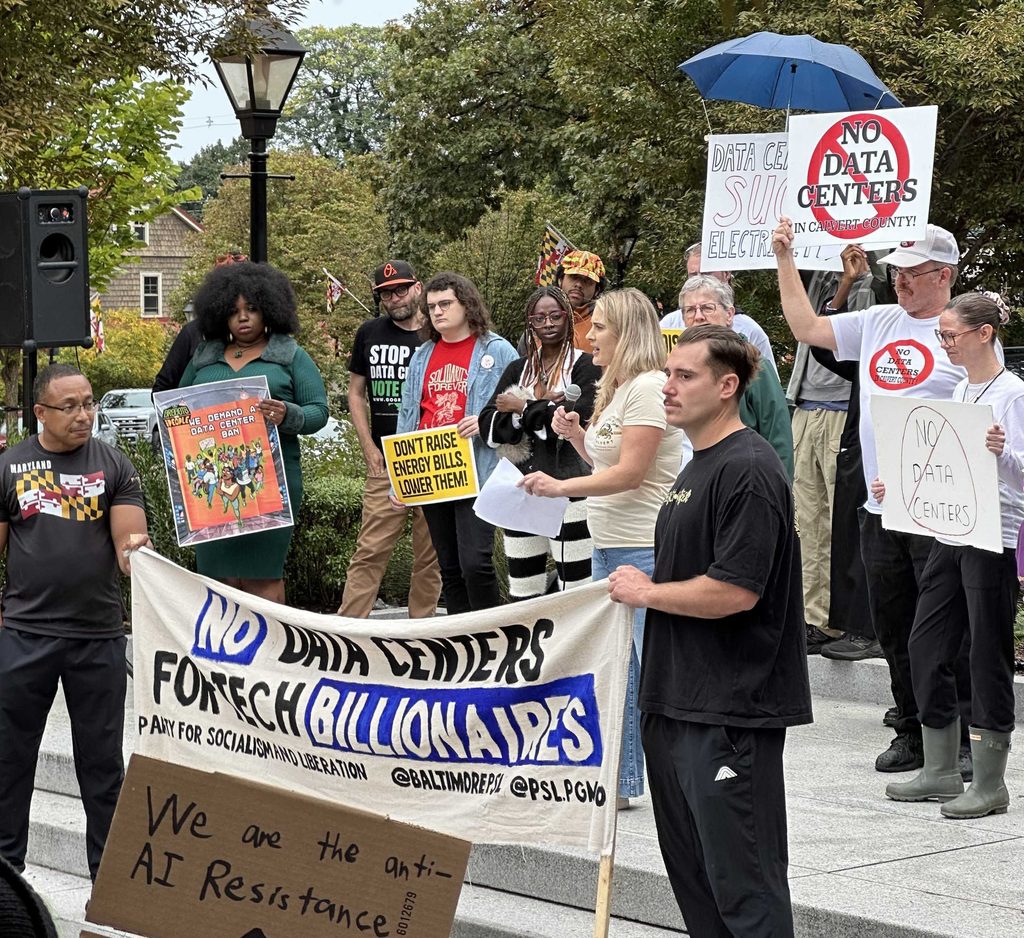
It’s early October and it’s almost 9pm. I’m arriving at Breaks Interstate Park on the Virginia/Kentucky border. It’s pitch black and I’ve been driving through winding and foggy mountain roads without cellphone service for the last 2 hours of the 8 hour drive. I don’t know what to expect around each corner or from the convening as I finally reach the entrance to a five mile gorge called the Grand Canyon of the South. I’m arriving late to the gathering which started earlier that day after co-hosting a Brobots vs The People episode the night before and rushing earlier in the morning to pick up posters and a banner for our first statewide rally to ban data centers in Maryland happening later that afternoon.
I’ve spent a lot of time in this area of the state and similar communities in West Virginia back when I was a labor organizer. Although I don’t know what to expect from the gathering, the surroundings and the people will be familiar to me when the sun comes up. We are in one of the most impoverished areas in the entire country, Buchanan County, which is projected to lose half its population in the next two years as it navigates ever-more-rapid economic decline. This was coal country. One of the oldest mountain ranges in the world was sacrificed to a brief period of capitalist extraction that began around 1900, and now is dotted with waste coal, abandoned mines, and dirty air and water.
I’m here for a People’s Movement Assembly at an Appalachian Regional Mutual Aid Gathering, an annual event hosted by the Alliance for Appalachia – this year in partnership with the Gulf South to Appalachia Formation.
Though the work has been around for at least 20 years, this particular partnership emerged because of the regions’ shared struggles of extraction, pollution and displacement, and their shared resistance. Following the visionary frontline leadership of Black, Indigenous and poor white communities and advancing traditions like the Southern Freedom Struggle, GS2A connects organizers across 17 states to build momentum and political alignment.
The three-day gathering is decidedly queer, multi-racial, and multi-generational. Over the time together, I will observe a multi-tendency organizing kind of liberation space. Also, generally an anti-capitalist and abolitionist space.
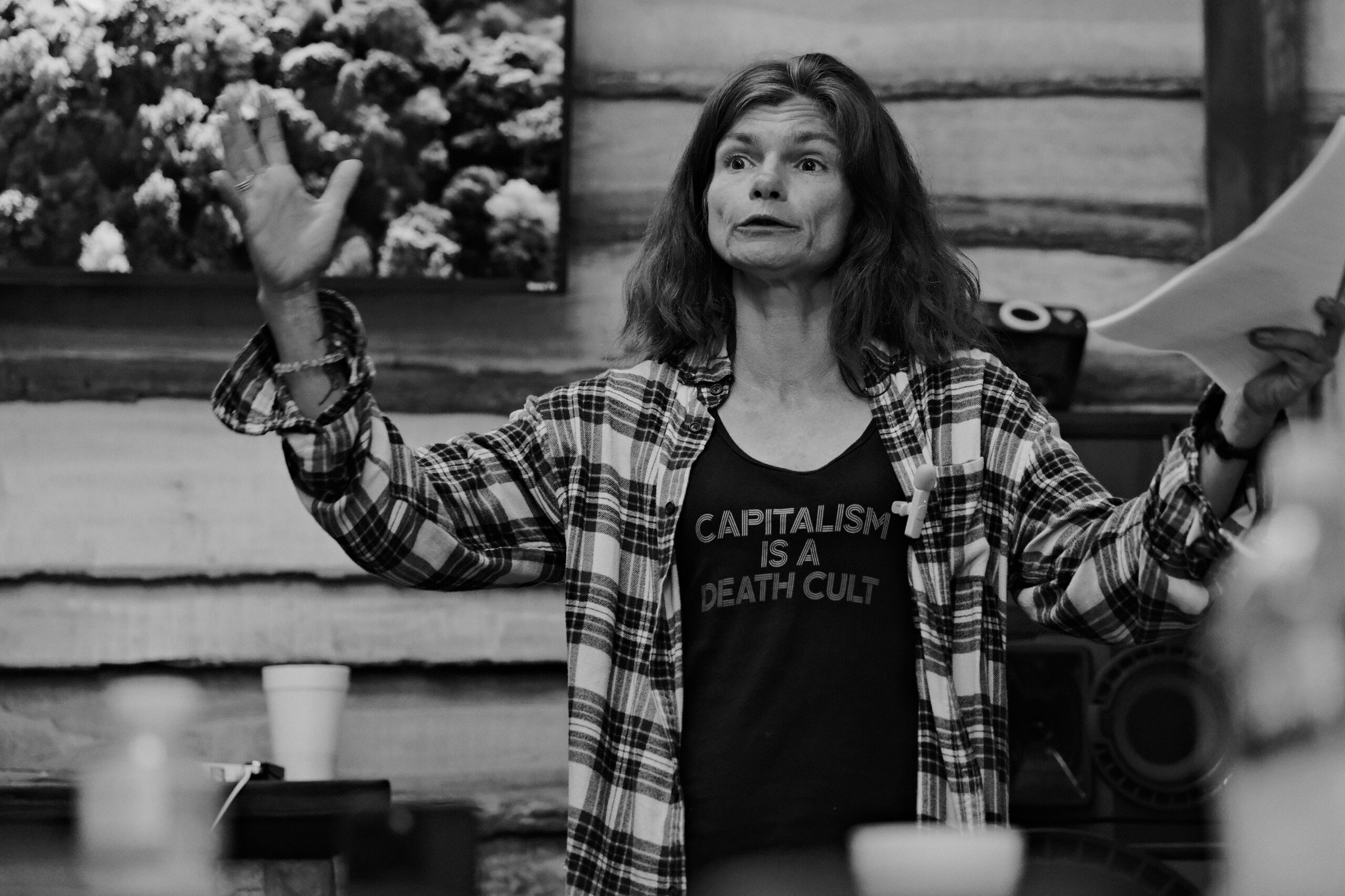
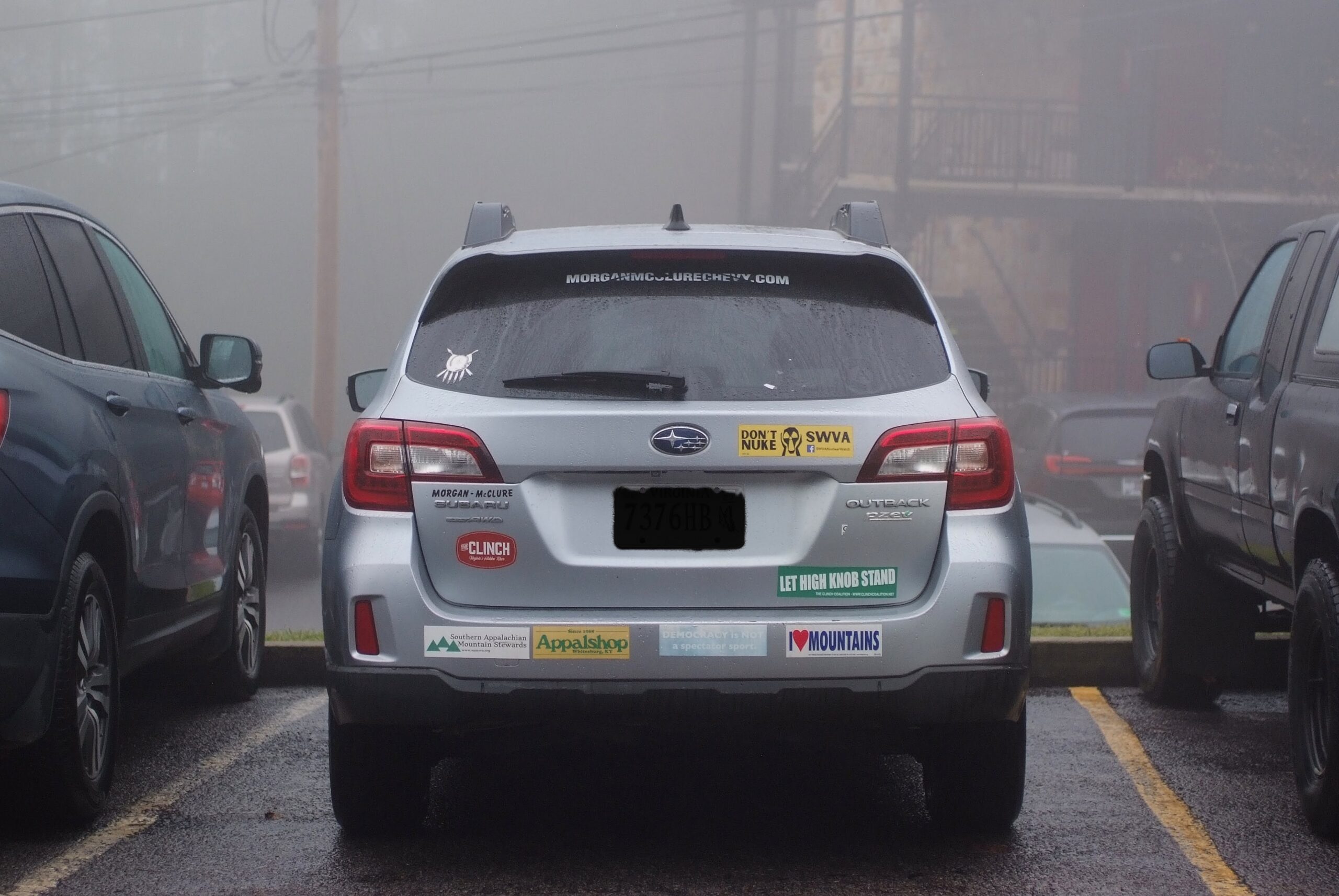
I see people, mostly new to me, but also some and longtime friends (like staff with Appalshop, a member of the previous MediaJustice Network) from regional, statewide and local organizations, and in this space all are finding camaraderie.
Organizing here involves a handful of people in the community getting together to do the difficult work of mutual aid in places where their politics and identities are not always welcome. This distinctly rural and Southern character looks like distributed trainings of 150 medics skilled up through decentralized and completely unfunded processes, or folks responding during natural and man made disasters to help their neighbors – including neighbors who could be many states and hollers away. Many of the folks doing this work have been deemed expendable in some form or another and nonetheless participate in mutual aid for all, like one session I went to facilitated by an Appalachian mutual aid organizer who is disabled and trans, who takes care of people who wouldn’t take their hand in friendship, but won’t turn it away when the floods hit or the winter storm.
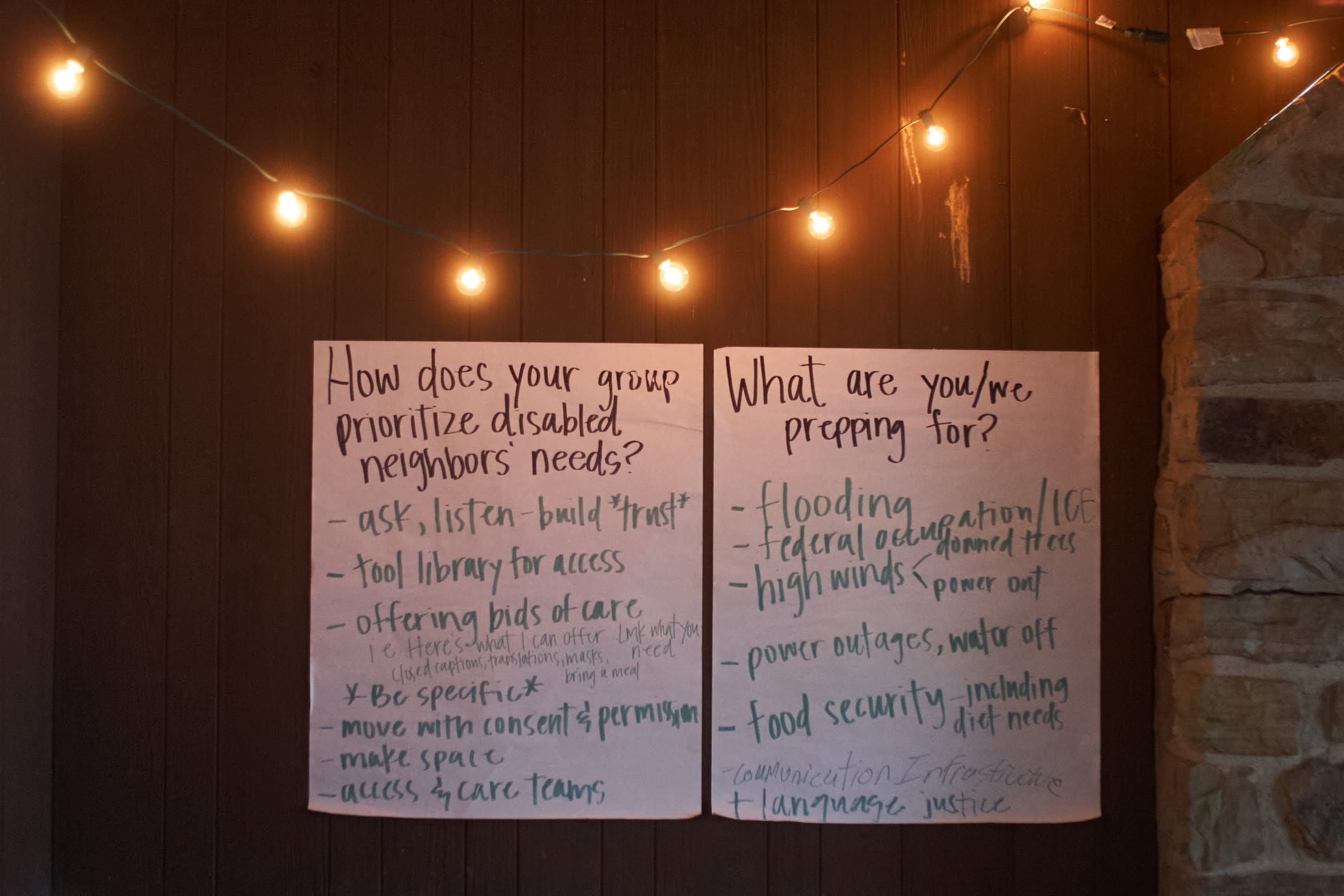
This work is very different from interventions that are often uplifted by or legible to funders.
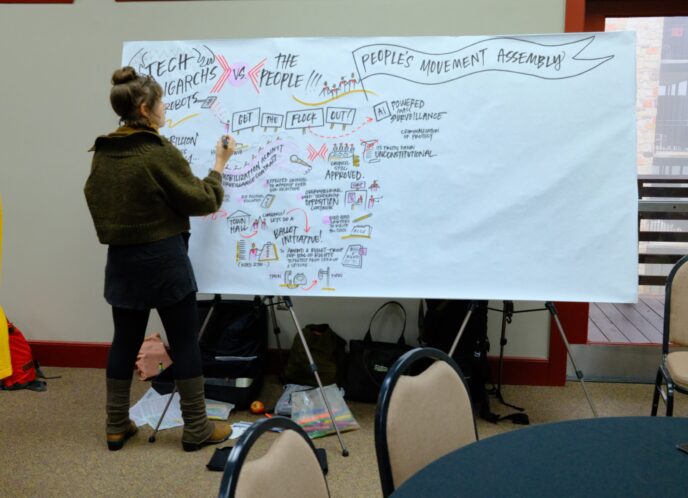
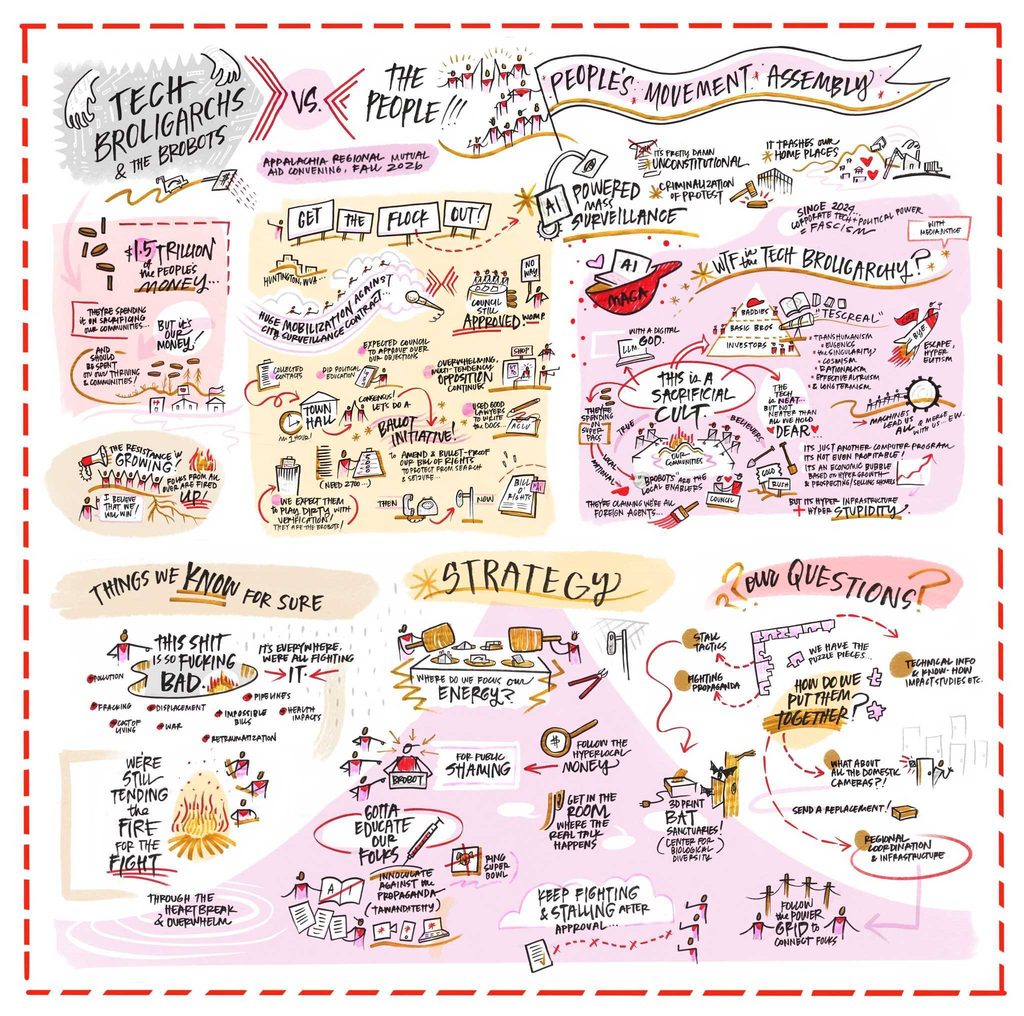
The People’s Movement Assembly model was designed for cases like this, where traditional governance has failed and contemporary interventions like voting haven’t gotten anyone anywhere. I step in to lead the Assembly with an organizer from Kentucky and another from West Virginia. Following our PMA Facilitation guide, we weave an analysis of the powers that be, the vision the AI Cult has for their communities – sacrificial extraction – and the local actors selling out their communities to the Tech Bros, the BroBots. We cover examples of current campaigns to weaken corporate power (like DeFlock in Huntington, WV), and tie the AI firms’ infrastructure (like data centers) to the deep memory of extraction and exploitation.
We explore how we feel about the stories we’re being told about technology, and where we see ourselves in the resistance and the AI future.
A few things become clear:
- The data center buildout isn’t just familiar – it’s retraumatizing.
- We’re tending the fire for the fight through the heartbreak and overwhelm.
- There’s a strong desire to know who is selling us out. Finding local BroBots, exposing and public shaming them is an important motivator for campaigns and actions.
- Though Big Tech itself is a sacrificial cult, technology is integral to the future vision. Folks are building meshtastic nodes for autonomous communication, 3D printing bat boxes to cover Flock cameras, and using technology for impact studies.
Folks are mindful that limited capacity requires increased focus and deliberate expenditures of energy. To build effectively, folks are looking to launch state-wide campaigns in places like Kentucky. They want to use regional power grids as an organizing frame to connect fights. And they want groups like MediaJustice to facilitate connections, offer technical know-how and get plugged into the rich web of resistance across the country, especially to technologists.
There will be more People’s Assemblies in the South, and an “assembly of assemblies” in the Spring, but for now being here is exactly where I need to be. This is a people’s assembly, but it’s also really all about the place.